Nordisk tidskrift för socioonomastik / Nordic Journal of Socio-Onomastics!
The first volume of the journal, which is published by The Royal Gustavus Adolphus Academy in Sweden, will be available in spring 2021 and possible to access online via the journal website. The first volume open for submission is planned for spring 2022.
The Nordic Journal of Socio-Onomastics will publish peer-reviewed scientific articles that discuss the role of proper names in society and social interaction. The journal is interdisciplinary and welcome articles from any discipline. This allows authors to use a wide range of theories, methods and perspectives to analyse names as well as to combine different types of data. Purely theoretical contributions are also welcome. The analyses may consider any kind of proper names, and although the journal focuses on Nordic perspectives, articles of Scandinavian or international interest from all over the world are welcome. The journal has an international and multidisciplinary advisory board, with members from different disciplines and different parts of the world.
Articles can be written in English or any of the Scandinavian Languages (Danish, Norwegian, Swedish). All articles are published with an English abstract. If you are interested in submitting, please note the instructions on the journal website.
One of the project results is this website, that will be the center of the network from now on. The network members will regularly publish blog posts with news about research, events and publications with socio-onomastic content. The entries will be written in the Nordic languages or English. The web-blog will be the most dynamic feature on the site, but new information about research ideas and network participants will be added when relevant.
The research
project ideas identified through the workshop-project live on in smaller
sub-networks. Each of these sub-networks will explore the best ways to bring
each idea in to life as concrete research projects, and – possibly – also work
with a variation of smaller outcome with different angles on the subjects. The project ideas will be developed over time
depending on the concrete resources available.
At the same time,
we will try to apply for funding for another NOS-HS workshop series to be able
to concretize and sharpen those of the project topics that are best suited for
large projects with collaboration between several researchers from different
countries. The aim of this will be a concentrated preparation of specific research applications that are strong enough
for international competition.
The upcoming Nordic Journal of Socio-Onomastics / Nordisk Tidskrift för socio-onomastik will soon be presented in more detail here on the blog. It will be a significant publishing channel for future socio-onomastic research both in the Nordic region and in a wider international context.
Our network will present its results and future ideas at the next international onomastic congress in Krákow in August 2020 (ICOS 2020). We encourage all interested in socio-onomastics to contact us there.
We look forward to be acquainted with the many new socio-onomastic initiatives that we hope and expect the future will bring.
On the
evening of the 28th of November our group of three onomasticians:
Terhi Ainiala, Väinö Syrjälä and I held presentations at Tieteiden talo (The
House of Science and Letters) in Helsinki, hosted by Kotikielen seura – The
Society for the Study of Finnish. The heading title of the evening was Kaupunkinimien kerrostumia:
sosio-onomastisia näkökulmia Helsingin paikannimistöön (Layers in the
Namescape of Cities: Socio-onomastic Viewpoints on the Place Names of Helsinki).
The event collected an abnormally large crowd of listeners.
Terhi
opened up the evening by telling the audience about the corpus’ onomastical
approach to the variation of the two slang names for Helsinki: Hesa and Stadi. The corpus was collected from the popular Finnish discussion
forum Suomi24.
In his
presentation Väinö told about the linguistic landscape of Helsinki from the
turn of the last century, especially of multilinguality in commercial names.
Väinö used old photos to show, how Russian, Swedish and Finnish were used on
for example the storefronts of shops in the city and how the usage of different
languages changed when years went by. Väinö also discussed what kinds of
difficulties a researcher has to face when researching the linguistic landscape
from such a long time ago.
In my presentation
I presented my initial findings about his research into the place names of the
military island Santahamina, located in South-Eastern Helsinki.
The presentation covered two major themes: the official street names of Santahamina and the slang varieties for the island’s name.
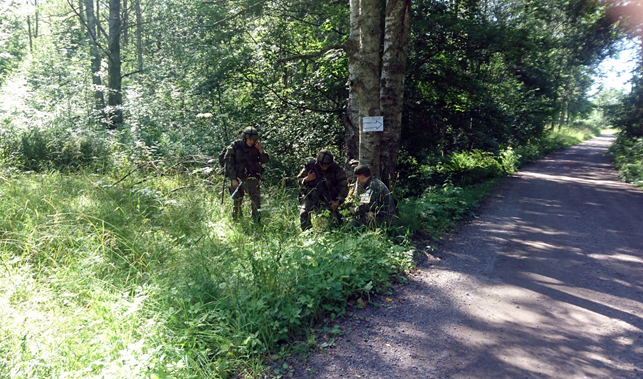
Finnish conscripts taking part in the fighters’ examination, on a break in the forest area next to the road Eteläkärjentie/Söderuddsvägen of Santahamina. The roads literal translation “Southern Tip’s Road” is due to it leading to the southernmost part of the island. The fighter’s examination is mandatory test that must be passed to progress in the training. FOTO: Ossian Hartig.
Santahamina
received its very first official street names and signs in 2011 after more than
a decade of using tsar-era (pre 1917) signage that consisted of
letter-number-combinations. The official naming was presented with to tracks
that contributed to the process reaching its conclusion in 2011. Firstly, the
official documents from Finnish Army Archives that laid out the official
reasoning for replacing the old naming system. Secondly there were the
discussions held with local, long-time residents of the island who for a long
time had pushed both the military and the city to recognize the unofficial oral
place name tradition the island’s residents had used for decades.
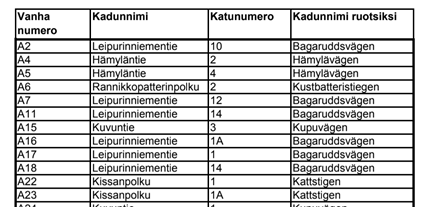
A clipping from an Army document from 2012 showing the old sector and building numbers (Vanha numero) – the letter describes the sector; the number is the building. In the other columns one can see the (new) street name (Kadunnimi), the street number (Katunumero) and the street name in Swedish (Kadunnimi ruotsiksi).
In the second part of my presentation I discussed the variation of the different slang varieties of the name of the island, in particular the two rather similar Santis and Sandis. The latter, formed from the Swedish-language name Sandhamn, is mostly used by more mature language users and professional soldiers. Santis on the other hand is formed from the Finnish name. The surveyed conscripts (mostly 20-year olds) had never heard of the variant Sandis. The older segment was aware of the name Santis, but regarded it as the inferior or outright wrong name for Santahamina.
All the presentations inspired vivid conversation and questions from the crowd.
I månadsskiftet oktober-november ordnades namnforskardagarna vid Helsingfors universitet. Redan för tjugoandra gången samlades namnforskare från hela Finland (denna gång med kära gäster från Estland) för att få en uppdatering i vad som just nu händer inom onomastiken.
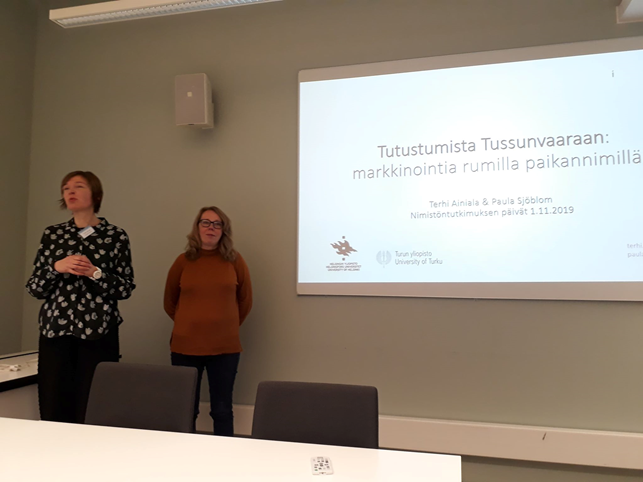
I programmet hade vi sjutton vetenskapliga föredrag, med flera doktorander och nyblivna magistrar som presenterade sina ämnen. Ett flertal socioonomastiska föredrag presenterades under dagarna. Speciellt intressant var Emmi Sulanders presentation om inofficiella ortnamn på svenska i Helsingfors (på basis av hennes pro gradu -avhandling, alltså slutarbete för magistersgraden). Terhi Ainialas och Paula Sjöbloms fallstudie om snuskiga ortnamn i marknadsföringen av ett visst turistmål i Finland väckte också livlig diskussion.
Terhi Ainiala & Paula Sjöblom. Foto: Lasse Hämäläinen
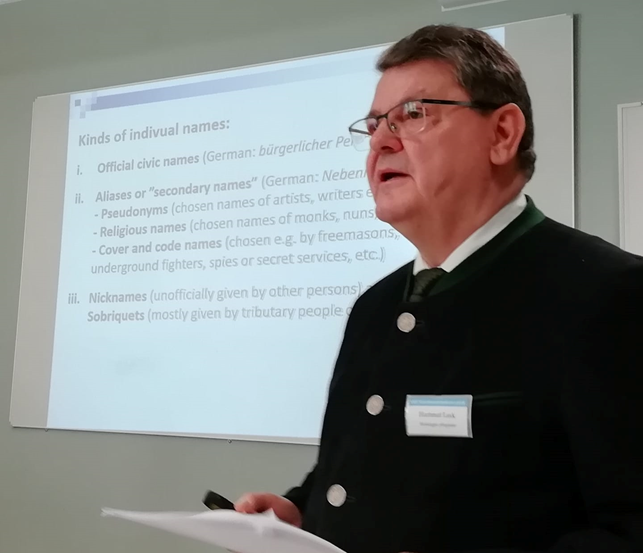
Som gästtalare hade vi prof. Hartmut Lenk, som talade om hur personnamn används i texter och hur dessa användningssätt är olika då förhållandet till den aktuella personen är olik.
Hartmut Lenk. Foto: Johanna Virkkula
Dessa plock ur programmet får representera våra namnforskardagar. Det bästa med namnforskardagarna är att man en gång om året kan uppdatera sig på vad som är nytt både inom undervisningen av namnforskning och forskning; de flesta år har vi ett deltagarantal över femtio, då även huvudstadsregionens namnplanerare och namn- och språkvårdare från Institutet för de inhemska språken gärna deltar.
Hela programmet för namnforskardagarna 2019 finns här: https://blogs.helsinki.fi/nimipaivat/ohjelma/ – och denna adress blir inför namnforskardagarna 2020 uppdaterad med det aktuella programmet.
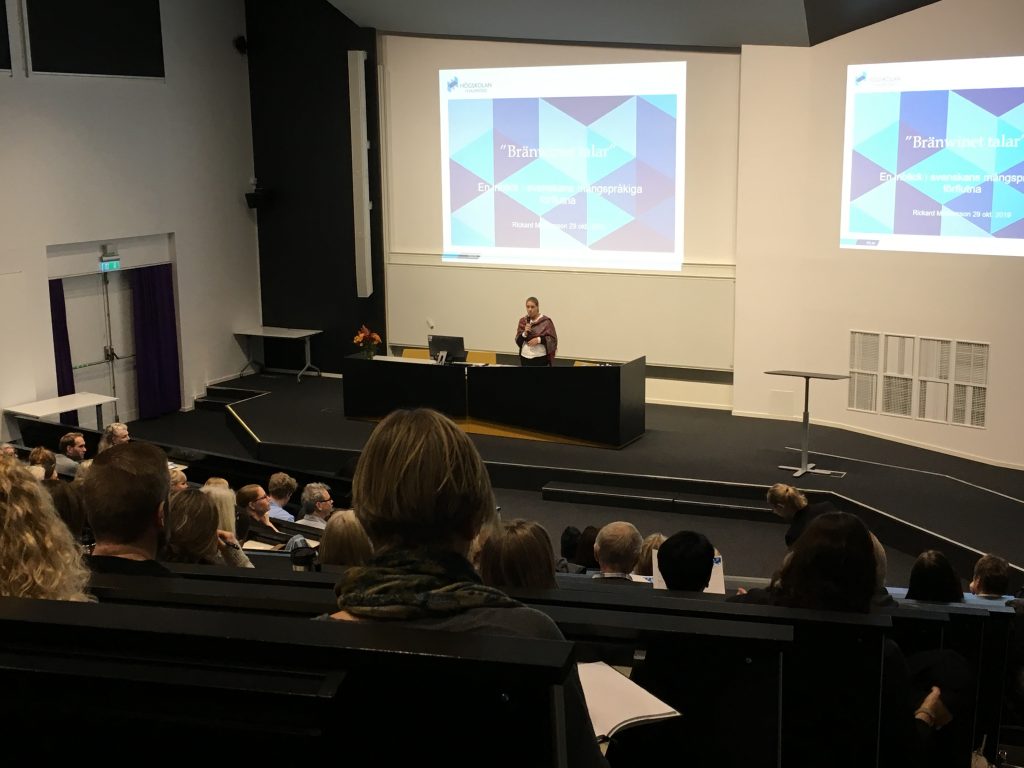
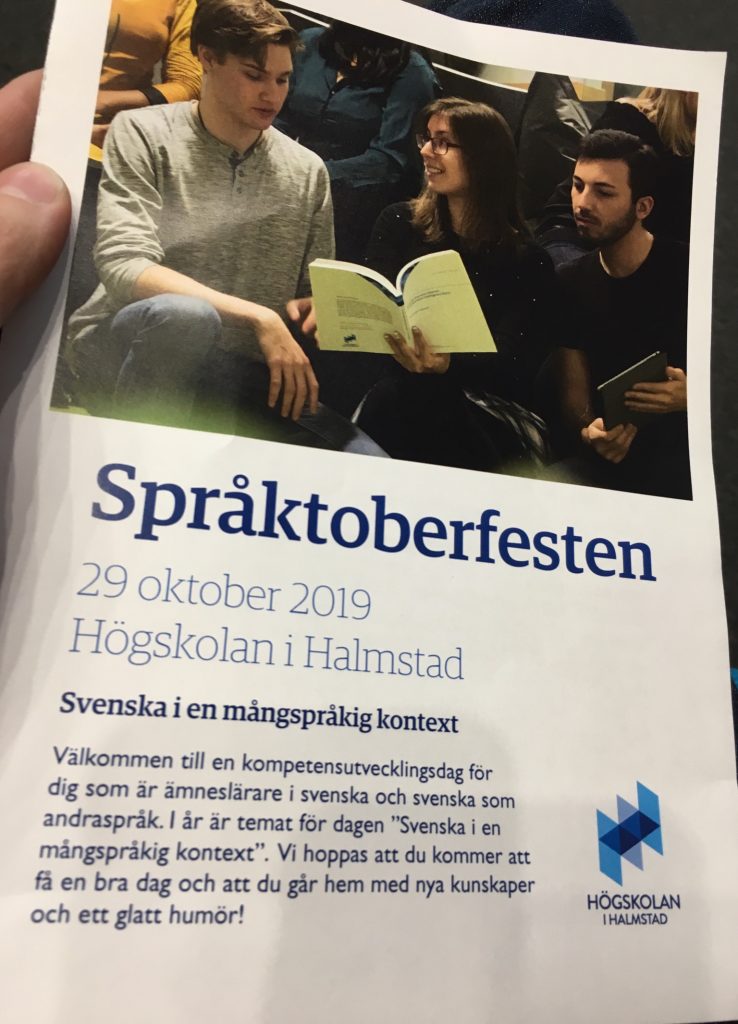
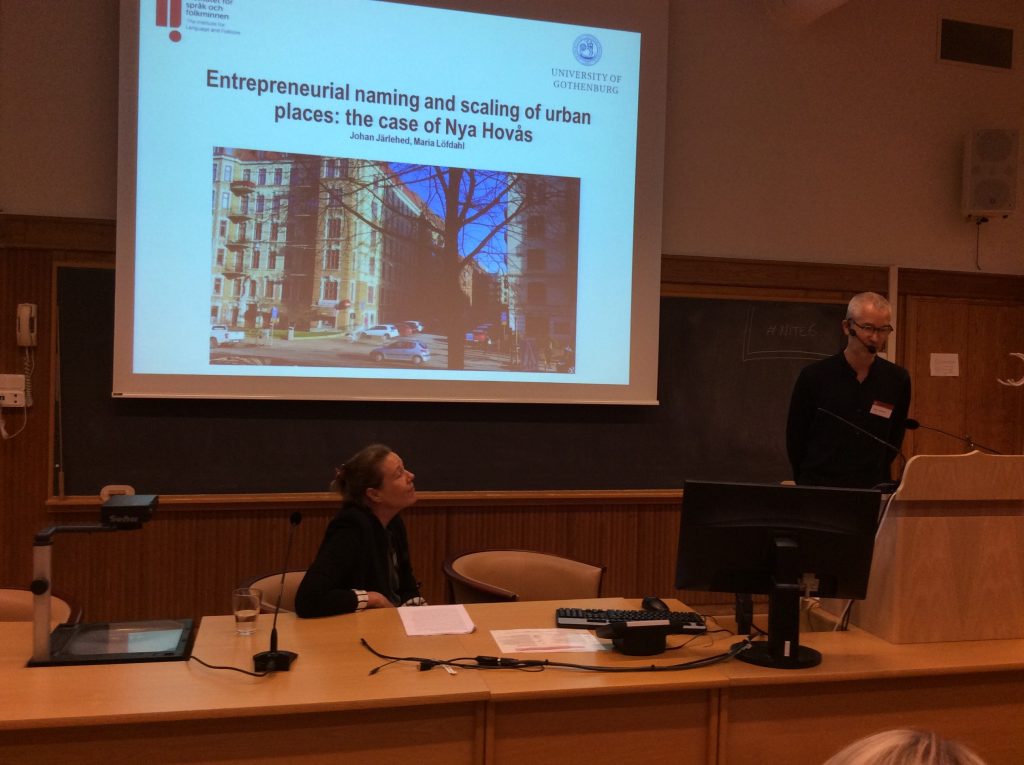
Häromdagen genomfördes en Språktoberfest på Högskolan i Halmstad – en kompetensutvecklingsdag för lärare i svenska och svenska som andraspråk. Evenemanget ägde rum den 29 oktober 2019 och lockade ett hundratal besökare från regionen. Årets tema var ”Svenskan i en mångspråkig kontext” och ett par av föredragen berörde socioonomastik. Professor Staffan Nyström från Uppsala universitet talade om valet av exonymer, såsom Peking-Beijing och Burma-Myanmar. Åhörarna fick veta vilka aktörer i Sverige och FN som försöker reglera detta namnbruk och hur de (språk)politiska argumenten kan se ut. Docent Johan Järlehed från Göteborgs universitet talade om lingvistiska landskap, segregation och gentrifiering i Göteborg. Utifrån exempel som Nya Hovås diskuterades hur bland annat namngivning av områden kan bidra till kommersialisering av platser och skapandet av sociala gränser i staden. Båda föredragen gav upphov till intressanta frågor och diskussion bland besökarna.
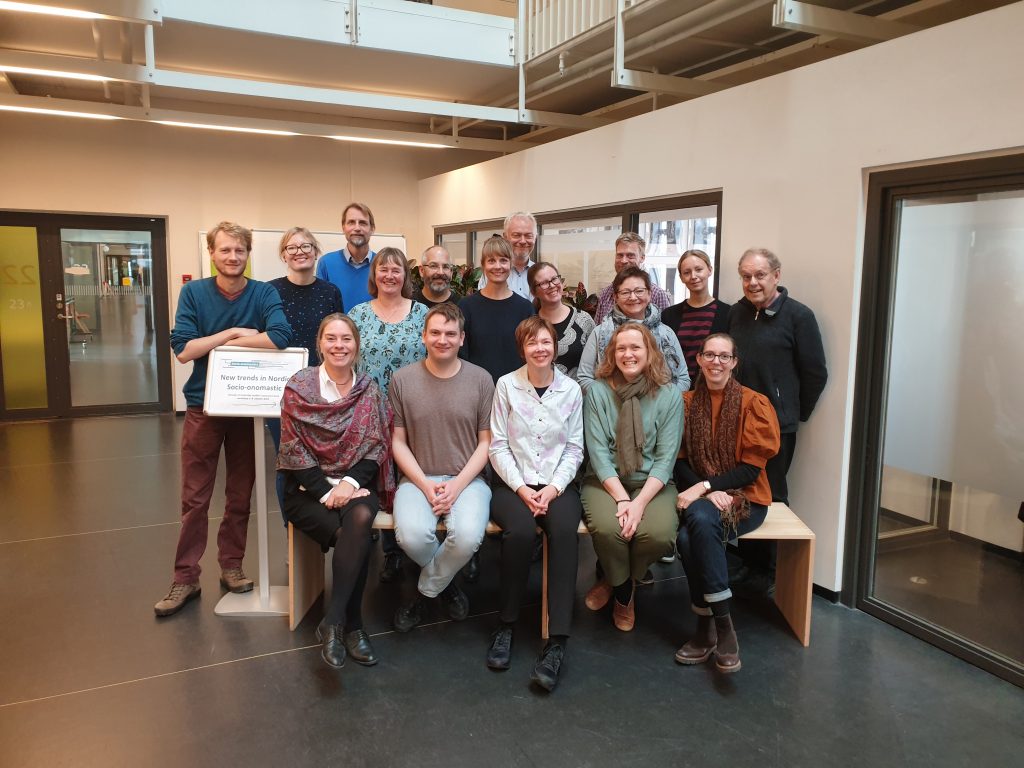
Den sidste workshop i projektet New Trends
in Nordic Socio-onomastics blev holdt i København i dagene 2.-4. oktober
2019. Denne gang handlede det om metoder til brug i undersøgelser af historiske
navnematerialer.
Efter workshoppens præsentationer, øvelser og diskussioner står det klart at der findes mange muligheder for at afdække socioonomastiske problemstillinger gennem metoder fra tilgrænsende fag.
Arkivernes digitaliseringer af store mængder
kildemateriale giver et enormt potentiale til undersøgelser på tværs af tid,
geografisk udbredelse og social stilling. Der er en begrænsning i at kunne
styre de store datamængder, men med involvering af datakyndige i projekterne,
vil det kunne afhjælpes og mange nye indsigter kan opnås.
Nye vinkler på arkæologiens materielle fund til belysning af det ordstof som indgår ældre tiders navne, giver interessante udsigter til ny viden om de ældste navnelag, som ellers er svære at tilgå med en socioonomastisk vinkel.
De nye perspektiver inspirerede til yderligere bearbejdning af de idéer til forskningsprojekter på tværs i Norden som fostredes ved forårets workshop i Halmstad. Det resulterede i gode, velbelyste og grundigt gennemtænkte projektidéer som kan give anledning til en række fremragende forskningsansøgninger på tværs i Norden i de kommende år.
Nu nærmer sig tiden for den tredje workshop for netværket New Trends in Nordic Socio-onomastics. Den 2.-4. oktober 2019 samles vi på Københavns Universitet for at inspireres af metoder med relevans for historiske studier som bruges i andre forskningsdiscipliner.
Workshoppens program byder på en blanding af gæsteforelæsninger, gruppediskussioner og praktiske forsøg. Der stiftes bekendtskab med et arkæologisk syn på jernalderens personnavne, oparbejdelsen af store kvantitative data i bl.a. digitaliserede folketællinger samt den historiske sociolingvistiks metoder, og praktiske øvelser med digitaliseret historisk materiale giver indblik i hvilke potentialer der er for socioonomastikken i sådanne materialer.
De nye input diskuteres i grupper og i plenum, og de nye perspektiver bruges til videreudviklingen af projektidéerne fra de to tidligere workshops. Workshoppens kreative dage vil uden tvivl give nye perspektiver på socioonomastikkens muligheder fremover. Læs mere om de tre planlagte workshops her.
Text: Vilma Lauhakangas & Manu Paavilainen Photographs: Oona Raatikainen
The writers are students at the Faculty of Arts at the University of Helsinki. They worked as conference assistants at the conference.
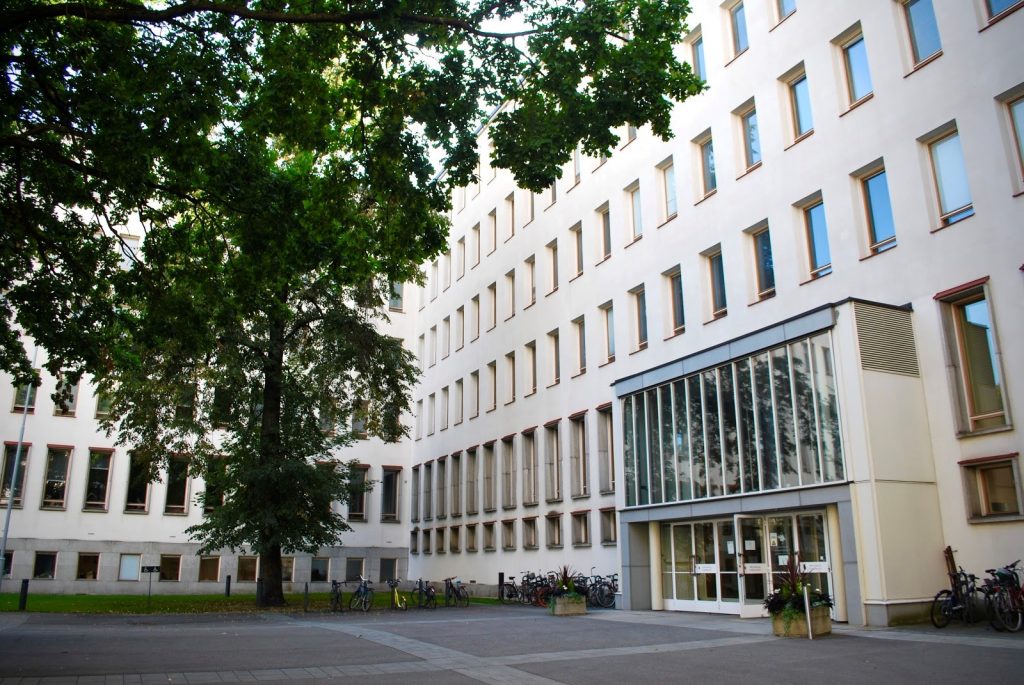
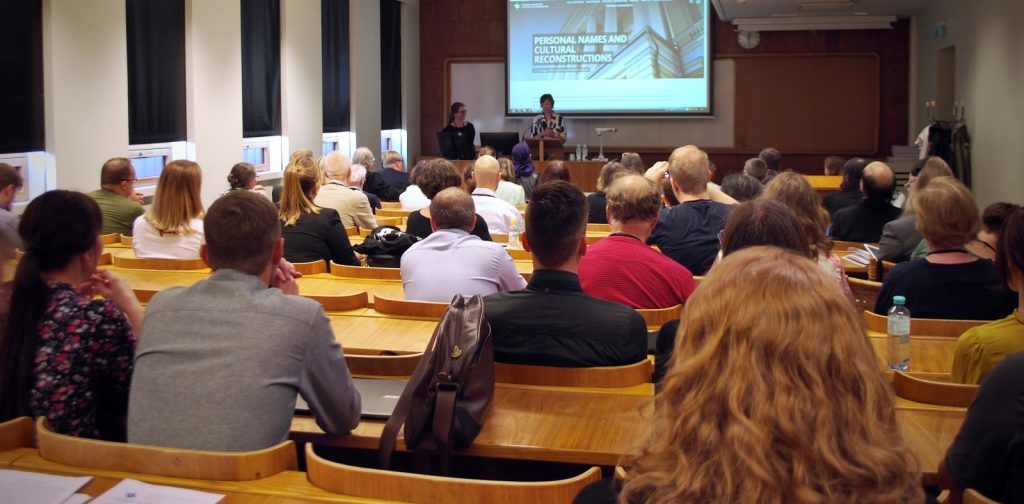
The conference of Personal Names and Cultural Reconstructions was held at the University of Helsinki on August 21ー23. The venue of the conference was Metsätalo (“forest house”), an 80-year-old building that once introduced its students to sciences that were far from linguistics. What is interesting about the decor of Metsätalo is that itshows all the species of wood native to Finland. During the first day of the conference, it was palpable that the beautiful wooden architecture had made a nice first impression on the visitors.
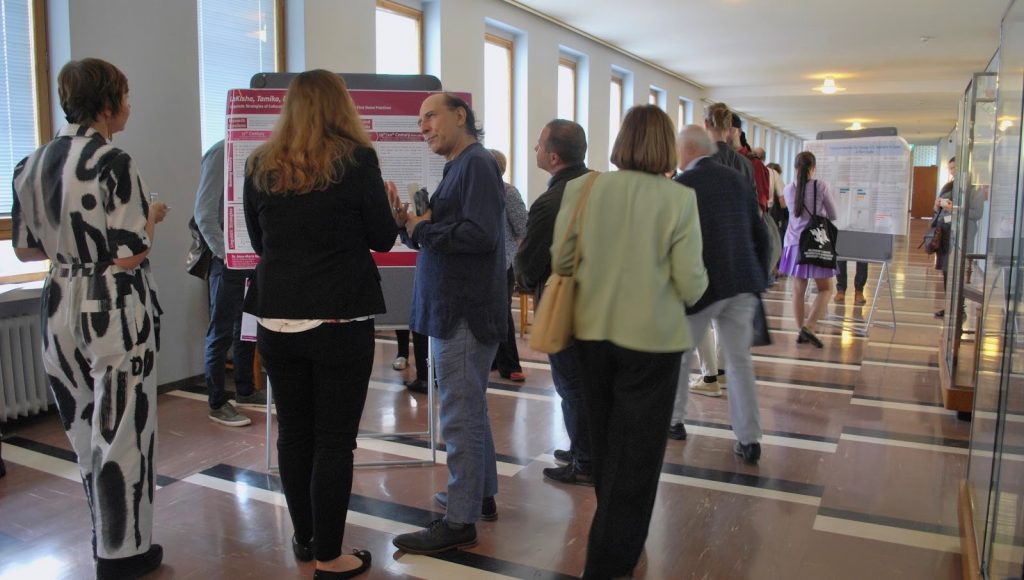
A conference regarding personal names seemed to be something that the people in the field had been hoping to have for quite some time. The conference organizers and representatives of the University of Helsinki, Terhi Ainiala and Johanna Virkkula, were happy to welcome the 76 attending researchers from 28 countries. In addition to linguists and onomasticians, scholars from the fields of history, archeology and other disciplines were present. The programme of the conference included three keynote lectures, 50 session papers and nine posters.
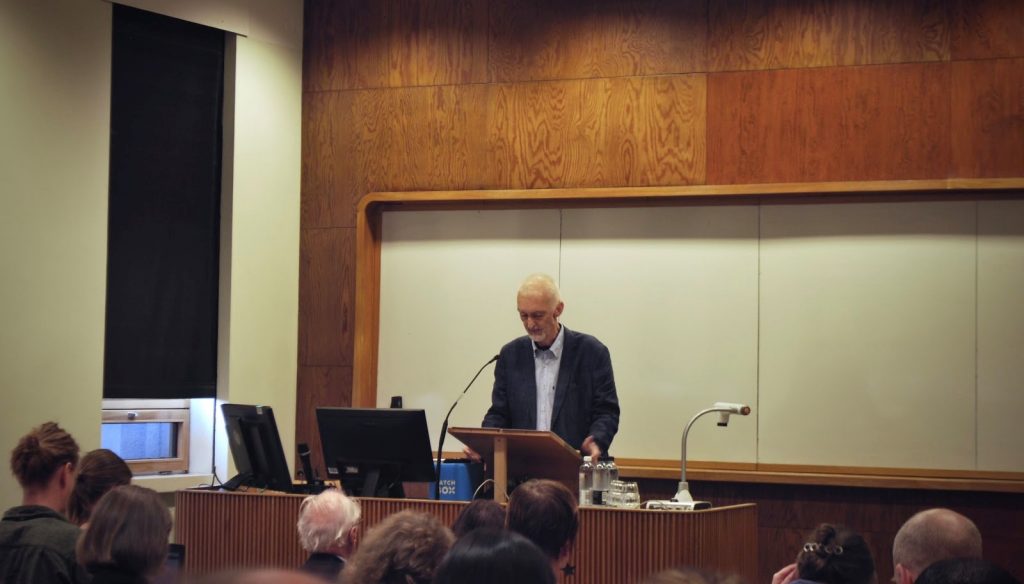
As the first keynote speaker, Ellen Bramwell from the University of Glasgow, opened the presentation part of the conference with a socio-onomastical look into personal names and the effect of dominant British and Scottish naming systems within different communities in Scotland. The second keynote, by Mr. Frog from the University of Helsinki, also had a local focus as it explored Finnic names and naming systems, and their connection to mythology and their value in historical reconstruction. The last keynote, by Aleksandar Loma from the University of Belgrade and Serbian Academy of Sciences, considered anthroponomastics and the problems of chronological and social stratification with a look into the use of zoonyms as given names among Indo-European people. The subject of personal names and naming systems was explored in a wide variety of ways spanning from deciphering ancient Etruscan cuneiform to modern trends of the use of syllables in Japanese given names.
The conference
dinner was served in the well-known restaurant and culinary college Perho.
After the dinner, there was a musical performance by the vocal group
Kärhämä. The lyrics and composition were generated by Lotta Jalava,
inspired by etymologies proposed by professor Janne Saarikivi.
The following
morning it was raining in Helsinki. The conference program of the last day
still attracted a lot of people and soon the corridor was full of umbrellas and
the sound of laughter. The sun came out eventually and the presentations
continued until the afternoon. The conference ended with a closing session by
the organizers, Terhi Ainiala, Jaakko Raunamaa, Janne Saarikivi and Johanna
Virkkula.
Den sjätte internationella konferensen i namn och ekonomi, Names in the economy, ordnades i början av juni 2019 i Uppsala. Deltagare var från 15 olika länder och 32 föredrag hölls under tre inspirerande dagar. Största delen av föredrag handlade kommersiella namn (firmanamn och produktnamn), men även andra namnkategorier diskuterades i synnerhet med anknytning i namnens kommersialism. Jag tar upp ett par spännande exempel som är – eller åtminstone kunde vara – relevanta för socioonomastiken.
I sitt plenarföredrag presenterade Johan Järlehed och Maria Löfdahl en fallstudie i en urban miljö, nämligen namnet Nya Hovås i Göteborg. De tangerade på ett tvärvetenskapligt sätt sådana fall där urbana bostadsområden och även andra platser marknadsföras med hjälp av ”säljande” namn. Nya Hovås är inte ett traditionellt ortnamn, utan en sammanslagning av ett gammalt namn Hovås + adjektivet ny. Hovås i sin tur är ett äldre område relativt nära det nya området som fick namnet Nya Hovås av byggnadsföretag. En mäktig kampanj kring det nya området har genomförts med tanke på att skapa en unik identitet som baserar sig i följande värden: nyhet (Hovås vs. Nya Hovås), tillgänglighet, urban “coolness”, kreativitet och internationell smak, som syns t.ex. i val av namn och språk som anses ha hög status.
Föredraget visade
på ett imponerande sätt hur namn ofta anknyts i marknadsföringen. För oss
socioonomastiker kunde även språkbrukarnas observationer och attityder kring
sådana namn vara ytterst intressanta, samt det konkreta bruket av sådana
”konstgjorda” namn kunde forskas närmare.
Järlehed och
Löfdahl lade även märke till multimodalitet i namn. Samma fråga togs upp i
några andra föredrag, t.ex. i Line Sandsts presentation, i vilken hon hade
exempel från Köpenhamn och Uppsala. I gatubilden är namnens multimodalitet
väsentligt att observera, och enligt Sandst kunde vi närmare studera hur olika
visuella element upplevs som namn (och kanske som icke-namn).
Forskning i det lingvistiska landskapet tar hela tiden nya uttrycksformer och hittar olika material. Väinö Syrjälä har börjat studera på det historiska lingvistiska landskapet i Helsingfors med hjälp av gamla bilder. De första resultaten visade bland annat att svenskan var mycket synligare i kommersiella namn i början av 1900-talet och att namnen ofta var rätt informativa. Forskning med hjälp av gamla foton tar mycket tid, men hoppas att även andra forskare kunde bli intresserad av dessa. Det vore spännande att t.ex. jämföra olika städer i olika tider.
Majoriteten av studier hade ett skriftligt material, som bestod av enbart namn eller av namn i lite större kontext, t.ex. i medietexter eller -annonser. Det var bara få föredrag som även tog upp språkbrukarnas ”reella” namnbruk antingen i tal eller i skrift. Sådana perspektiv kunde vara givande att knyta ihop i studier och på det sättet forska i det vilka namn som faktiskt används och vilka perceptioner som anknyts i olika namn. Här är en utmaning till oss!
Midt i april forsvarede Lars-Jakob Harding Kællerød sin ph.d.-afhandling med titlen Adam Gottlob Øhlenschlæger Hauch & Jeppe Smed Jensen. Et studie af etableringen af det efternavnetypologiske mellemnavn i Danmark i 1800-tallet. Afhandlingen er banebrydende på flere punkter: Den giver et fremragende bud på hvordan man kan analysere store, digitale navnedata; det er den første landsdækkende undersøgelse af danske mellemnavne og afdækker den tid hvor alle danskere prøver at vænne sig til de lov-påtvungne efternavne og i en vis udstrækning er begyndt at bruge mere end ét efternavnetypologisk navn. (I dansk navnelovgivning kan kun det sidste navn i en persons navnerække være efternavnet. De navne som har efternavnetypologisk karakter, men står før efternavnet, er mellemnavne!)
Flere aspekter i afhandlingen er socioonomastiske. Eksempelvis er kønsfordelingen skæv – der er mange flere mænd end kvinder som bærer mellemnavne, og den geografiske fordeling af personer med mellemnavn i 1880 har – ganske overraskende – tyngdepunkt i Nordvestjylland.
Afhandlingens
resume lyder:
”Afhandlingen undersøger mellemnavnebrugen i Danmark i det 19. århundrede i
forhold til geografiske og demografiske aspekter. Mellemnavne defineres her som
et efternavnetypologisk navn, der optræder mellem fornavn(e) og efternavnet i
en persons fulde navn (onomastiske profil).
Datasættet omfatter alle
navne, der er registreret i den digitaliserede version af den danske
folketælling fra 1880, hvori lidt under 2.000.000 individer er registreret. Da
datasættet er omfattende og yderst heterogent præsenteret, er en systematisk
metode etableret, hvorved navnekomponenter typologisk kan identificeres ved en
kombination af mekaniske og manuelle processer. Derved har det været muligt at
identificere mellemnavne eller fraværet af mellemnavn i mere end 98 % af de
onomastiske profiler, der er anført i folketællingen. Mellemnavne findes i ca.
6,2 % af tilfældene. Samtidig giver afhandlingen et bud på en opstilling af
principper for lemmatisering og kategorisering af mellemnavne i historisk
materiale.
Mellemnavne har en lang
historie i Danmark, men var indtil det 19. århundrede næsten udelukkende i brug
i samfundets bedrestillede klasser. Forholdet mellem en socialt bredere brug af
mellemnavn og en række samfundsmæssige forandringer i det 19. århundrede er
undersøgt. Til dette formål er opstillet tre forskningsspørgsmål: 1. Hvilke
mellemnavne bruges i folketællingen? 2. Hvordan anvendes mellemnavne? og 3. Er
de tegn på en tidlig relation mellem brugen af mellemnavne og individers
identitet og identifikationsbehov, som på grund af en række samfundsmæssige
forandringer i det 19. århundrede kan forventes at have ændret sig i perioden?
Ved at undersøge dette i relation til en række grografiske og demografiske
aspekter (eksempelvis køn og alder) opnås et dybtgående indblik i tidens
mellemnavnebrug.
Mere end 80 % af
mellemnavnene udgøres af patronymer, mens mellemnavne dannet til
stedbetegnelser dominerer i forhold til antallet af leksikalske navne. Der er
betydelige geografiske forskelle i mellemnavnebrugen, da de er mere almindelige
i landdistriktene, hvor de højeste frekvenser findes i Jylland. Mænd er langt
oftere anført med mellemnavne end kvinder, men i visse sogne findes dog
relativt høje frekvenser for kvindelige mellemnavnebærere. Med hensyn til
alder, er mellemnavne forholdsvis jævnt fordelt. Dog ses en mindre stigning i
andelen af mellemnavnebærere blandt personer født efter 1856, hvilket kan hænge
sammen med tidens navngivningsrestriktioner.”
Ph.d.-afhandlinger fra Københavns Universitet har desværre ikke status som udgivne bøger, og derfor kan man ikke bestille Kællerøds afhandling, men den kan downloades i pdf-format her.